They nailed it! Fans pay artistic tribute to Olympics

Monday, August 13, 2012

Gabriela Medina even <a href='http://ireport.cnn.com/docs/DOC-825971'>painted her toes to match</a>! "I love supporting and cheering on my team," said the Wesley Chapel, Florida, resident. Medina likes to create nail art for various holidays, and says, "you have to have a steady hand." Appropriately, the college student aspires to be a surgeon.
Not since the days of American track star Florence Griffith Joyner has nail art been front and center as an Olympic style trend like it is at the 2012 London Olympics. Athletes are showing their competitive spirit through flag-decorated nails and colors meant to mimic the medals they aim to win.
But these special motifs aren't just for Olympians.
Samantha Tremlin is one of many nail art fans getting into the spirit of the 2012 London Olympics with funky fingertips. She wasn't crazy about the Olympics before the summer games came to her country this year. But since then, the manicure fanatic who goes by "the Nailasaurus" has been honing her technique of recreating tiny Union Jack designs.
"Nail art is a hobby of mine, so as the Olympics are quite a big event and being held in my home country this year, I thought I would show some support for Team Great Britain!" said the 21-year-old Cardiff, Wales, resident, who shared her handiwork.
"This year it's very close to home. It feels as though the games have united every single person in the country with all excitement and pride we're feeling."
From swimmers Missy Franklin and Rebecca Addlington to archers, cyclists and weightlifters, athletes everywhere are sporting patriotic nail decor at the games, thanks in part to British "nail queen" Sophy Robson, whose team of nail artists is providing services to athletes and their guests in "grooming salons" in the Olympic Village.
"It was such fun working with the athletes," said Robson, who designed a menu of 207 country flags to choose from in a partnership with corporate sponsor P&G. "There are no egos involved and they are just excited to have something represent their country on their nails."
Even if you're not in London or Europe, participating in the nail art trend connects viewers to the revelry, celebrity nail technician Deborah Lippmann said.
"It's a way that everyone can feel like they're a part of the experience in a supportive way, no matter where you are," said Lippman, whose eponymous nail polish brand is sold worldwide.
It's not as permanent as a haircut and having 10 fingers means the opportunity to sport various themes, with one finger dedicated to the American flag in support of country and the other to Usain Bolt because he's just that cool.
The appeal for fans is probably the same as it is for athletes: you can show off your patriotism without saying a word, said Lisa Bailey, the blogger behind the DIY resource Nail Art 101.
"Nail art can have the stigma of being for "prissy" girls or girls who are afraid to get down and dirty," Bailey said. "These women are showing that you can have hot nails and still break world records! It's no longer just for princesses and rich girls."
Da-Hae West, 25, is from South Korea, but she lives in London. She wrote "Republic of Korea" in Korean on her nails, accompanied by the national flag.
"It's a small way to show my support!" she said in an iReport.
Allison Fitzpatrick of Charlotte, North Carolina, has been experimenting with nail art for about two years as a way to "spice up the average manicure," the 29-year-old said in an iReport. It's also a great way to feel connected to the games, especially since athletes are also wearing nail art, she said.
"With the Olympics being such an inspiring event I wanted to be able to add some of that inspiration to my everyday life," she said.
"Whether the design is the iconic Olympic rings, the Union Jack to celebrate the host city or a recreation of gold medalist Missy Franklin's patriotic nails, nail art is a fun and creative way to show support for the athletes right here at home."
With the home-court advantage, the Brits probably claim the most enthusiastic Olympic-themed nail art. Plus, there's a lot of room to play around with the Union Jack, as nail art enthusiast Jenny Pasha of London demonstrated with her gold studded set of nails.
"I wanted to create a set of nails that were unique and showed off my support for Team GB," said Pasha, who documents nail art inspiration on her blog.
"I have done Union flag nails many times in the past, but for the Olympics everyone's goal is to go for a gold medal, so I decided to do an all gold set of nails," she said. "I am very proud to have the Olympics in my hometown and I love to show my pride through my nail art!"
Olympic athletes have been spotted sporting patriotic or Olympic-themed manicures throughout the games, and fans wanted to get in on the fun. Click through the gallery to see the most creative, elaborate and patriotic Olympic nail art.
Jenny Pasha of London created this studded manicure in support of Team GB. "I have done Union flag nails many times in the past, but for the Olympics, everyone's goal is to go for a gold medal, so I decided to do an all gold set of nails," she explained.
Pasha shows off the other half of her <a href='http://ireport.cnn.com/docs/DOC-824644'>elaborate gold manicure</a>. She says it took her about two hours to create the design.
American swimmer Missy Franklin's nails inspired this <a href='http://ireport.cnn.com/docs/DOC-824158'>patriotic design</a> by Allison Fitzpatrick. "Nail art is a great way to feel like you are part of the Games," said the Charlotte, North Carolina, resident.
Fitzpatrick created an equally stunning manicure featuring the Union flag "to celebrate the host city" of London.
Samantha Tremlin also wanted to show support for her home country of Great Britain. It took her about an hour to <a href='http://ireport.cnn.com/docs/DOC-824621'>paint this manicure</a> that features the Olympic rings, Union flag and logo for London 2012. "It feels as though the Games have united every single person in the country with all the excitement and pride we're feeling. The opening ceremony was just fantastic and made me so proud to be British," she said.
Siobhan Durkin of Birmingham, England, turned her nails into 10 little Union flags to "get behind my country" in the Olympics. She's been into nail art for <a href='http://ireport.cnn.com/docs/DOC-825459'>about a year</a>.
Maria Maslin painted her mother's nails to <a href='http://ireport.cnn.com/docs/DOC-825520'>reflect several of the countries</a> competing in the Olympics this year. "I tried to be diverse with the countries I picked in order to represent a large span of the world," she explained. From left, the flags represented are Germany, Italy, United States, Spain, South Africa, Great Britain, Israel and Japan. On her thumbs are the Olympic flag and Ireland.
"I'd consider myself somewhat of a tomboy," said Sonia Silva of San Diego. "I thought it'd be cool to try to put a sporty spin on a girly hobby, and I decided to try Olympic themed nail art." The <a href='http://ireport.cnn.com/docs/DOC-825575'>little gold medals</a> are especially cute!
Silva shows off another of her designs, complete with a unique American flag French manicure.
Da-Hae West lives in London, but is originally from South Korea. Her thumb features the South Korean flag, and the rest of her fingers <a href='http://ireport.cnn.com/docs/DOC-825451'>spell out</a> "Republic of Korea" in Korean.
Jayne Lim designed her manicure to represent her home country of Canada and her host country, Great Britain. "What better way to <a href='http://ireport.cnn.com/docs/DOC-824372'>celebrate and show support</a> for the London Olympics than with nail art?" said the Vancouver resident. "It lasts longer [and] is more subtle than face paint, and I can't be wearing Olympic regalia 24/7!"

Why Olympians bite their medals


Russia's Natalia Ishchenko and Svetlana Romashina bite their medals after winning gold in the duets free routine final during the synchronized swimming competition at the London 2012 Olympic Games.
It's a familiar pose by now: Fresh-faced Olympian grins while pretending to take a bite from the hard-won gold medal hanging around his neck.
But why do athletes feign chomping on their prized medallions, anyway?
Most likely to satisfy the pose-hungry media, says David Wallechinsky, president of the International Society of Olympic Historians. There are only so many things to do with a medal, and the excited champions are usually appeasing requests from the gallery of Olympic photographers when they bite down on their booty.
"It's become an obsession with the photographers," says Wallechinsky, co-author of "The Complete Book of the Olympics." "I think they look at it as an iconic shot, as something that you can probably sell. I don't think it's something the athletes would probably do on their own."


He's seeing the practice more this year than ever before, especially among swimmers -- though he has no idea why.
Photogs have caught star gymnast Gabby Douglas, track champ Sanya Richards-Ross and swimmer Ryan Lochte giving their medals some tooth. Lochte's shots sometimes feature the added bonus of a jewel-encrusted "grill."
It's not just an Olympic phenomenon, though. Spanish tennis player Rafael Nadal famously gnaws his trophies when he wins.
Historically, the practice of biting into metal seems to have its roots in money counterfeiting. Money handlers would bite down on coins to test their authenticity, said David W. Lange of Numismatic Guaranty Corporation. Gold is a relatively soft metal and would show wear when distressed.
Since coins have not contained precious metals for about the past 50 years, it would be silly to try munching on them nowadays.
So how much of an Olympic gold medal is actually gold? It varies by the Games.
This year, the gold medal consists of 1.34%, or about 6 grams, of gold. The remainder is 93% silver and 6% copper.
The amount of gold used to make a medal shrunk after each of the two World Wars, according to Olympic medal collector and expert Jim Greensfelder. Gold medals were made of solid gold at three Olympics -- in 1904, 1908 and 1912 -- but the medals themselves were smaller.
Silver medalist Michael Tinsley of the United States and gold medalist Felix Sanchez of Dominican Republic bite their medals after the men's 400-meter hurdles final.
Serena Williams of the U.S. poses on the podium with her gold medal after defeating Russia's Maria Sharapova in the women's singles gold medal match.
South Korea's Kim Jang-mi bites her gold medal on the podium after victory in the women's 25-meter pistol final.
Gold medalist France's Teddy Riner bites his medal after winning a judo event.

Stressed-out men find heavier women attractive


Stressed-out men find heavier women attractive
The study
Eighty-one heterosexual, white men, aged 18 to 42, were put into two groups. The first group took the Trier Social Stress Test, which increased stress levels by asking participants to take on the role of a job applicant in front of a hiring committee. The second group was sent to a room to wait quietly.
Both groups were then shown images of women with various body mass indexes. Study participants evaluated the women's attractiveness on a scale of 1 (very unattractive) to 9 (very attractive). They were then asked to select the woman they found most attractive, the largest woman they found attractive and the smallest woman they found attractive.

The results
While both groups rated underweight women the same, the men with more stress gave significantly higher ratings to women in the normal and high BMI categories than their calmer counterparts. The stressed group's picks for the largest woman they found attractive was also much heavier, on average, than the control group's picks.
The take-away
Not much, if we're being honest. Scientists have long known that a society's ideal body size is shaped by their access to resources. Larger women are preferred when there is a threat, like limited food, because their bodies signify the ability to survive in hostile environments. In today's world, that threat can be as simple as the possibility of unemployment.
Even hunger has an impact on the male mind - previous studies have shown that hungry men find heavier women attractive, according to the study. (Yet another reason to keep the chocolate in your hands!)

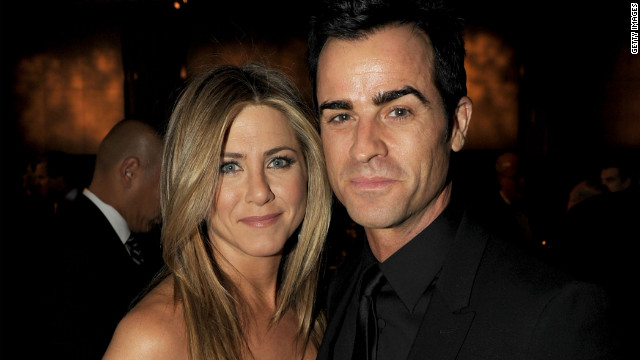
Jennifer Aniston engaged to actor Justin Theroux


Jennifer Aniston hasn't always been lucky in love, but she may have finally found her prince in<a href='http://www.cnn.com/2012/08/12/showbiz/aniston-engaged/index.html?hpt=en_c1' target='_blank'> fiancé</a> Justin Theroux. Here's a look back at some of Jen's men:Jennifer Aniston is heading back to the altar, after accepting a marriage proposal from Justin Theroux, representatives from both actors said Sunday.
The love life of Aniston, who was married from 2000 to 2005 to actor Brad Pitt, has been a subject of tabloid fodder for years, where she has been linked to a number of men, including musician John Mayer and comedic actor Vince Vaughn.
The 43-year-old actress has kept busy since departing the hit NBC sitcom "Friends" in 2004, including roles in films such as "Horrible Bosses," "Marley and Me" and "The Break-Up." Still, fans questioned whether she'd find a soul mate, especially after Pitt united with actress Angelina Jolie and their family grew.
"Having experienced everything you don't want in a partner over time, it starts to narrow down to what you actually do want," the actress told InStyle earlier this year. "As I get older, I realize what qualities are important in love and what suits me. And what I won't settle for.
"Justin Theroux had an amazing birthday Friday, receiving an extraordinary gift when his girlfriend, Jennifer Aniston, accepted his proposal of marriage," Theroux's representative Ina Treciokas said Sunday.Her quest ended Friday, when she got engaged to Theroux on his 41st birthday, Aniston's representative Stephen Huvane said.
Theroux has established himself in Hollywood on several fronts. According to the entertainment website IMDb.com, he was a screenwriter for the films "Tropic Thunder," "Iron Man 2" and "Rock of Ages" and has been in a number of films and TV series since the mid-1990s. These include "American Psycho," "Mulholland Drive," "Zoolander" and, most recently, "Wanderlust" along with Aniston.


11-year-old girl married to 40-year-old man

Monday, August 6, 2012
Before their wedding ceremony begins in rural Afghanistan, a 40-year-old man sits to be photographed with his 11-year-old bride. The girl tells the photographer that she is sad to be engaged because she had hoped to become a teacher. Her favorite class was Dari, the local language, before she had to leave her studies to get married.
She is one of the 51 million child brides around the world today. And it's not just Muslims; it happens across many cultures and regions.
Photographer Stephanie Sinclair has traveled the world taking pictures, like the one of the Afghan couple, to document the phenomenon. Christiane Amanpour spoke with Sinclair about a book which features her photographs called, "Questions without Answers: The World in Pictures by the Photographers of VII."
Faiz, 40, and Ghulam, 11, sit in her home prior to their wedding in the rural Afghnanistan on Sept. 11, 2005.
Faiz, 40, and Ghulam, 11, sit in her home prior to their wedding in rural Afghanistan in 2005.
Amanpour asked Sinclair if the 11-year-old Afghan girl married in 2005, and others like her, consummate their marriages at such an early age. Sinclair says while many Afghans told her the men would wait until puberty, women pulled her aside to tell her that indeed the men do have sex with the prepubescent brides.
Sinclair has been working on the project for nearly a decade. She goes into the areas with help from people in these communities who want the practice to stop, because they see the harmful repercussions.
Whenever I saw him, I hid. I hated to see him," Tahani (in pink) recalls of the early days of her marriage to Majed, when she was 6 and he was 25. The young wife posed for this portrait with former classmate Ghada, also a child bride, outside their mountain home in Hajjah.
"Whenever I saw him, I hid. I hated to see him," Tehani (in pink) recalls of the early days of her marriage to Majed, when she was 6 and he was 25. The young wife posed for this portrait with former classmate Ghada, also a child bride, outside their mountain home in Yemen.
In Yemen, a similar picture. Tehani and Ghada are sisters-in-law photographed with their husbands, who are both members of the military. Like most of the girls, Tehani didn’t even know she was getting married, until the wedding night. She was six years old.
Tehani describes how she entered the marriage, “They were decorating my hands, but I didn’t know they were going to marry me off. Then my mother came in and said, ‘Come on my daughter.’ They were dressing me up and I was asking, ‘Where are you taking me?’”
Sinclair says, “This harmful, traditional practice of child marriage is just so embedded in some of these cultures that the families don't protect them as they should.”
The subjects do know they’re being photographed and Sinclair tells them the topic she is working on. She does tell them that there is teen pregnancy in places like the U.S., but for the societies she’s photographing it’s even worse that 13-year-old girls are pregnant and unmarried.
Nujoud Ali, two years after her divorce - when she was only eight years old - from her husband, more than 20 years her senior.
Nujoud Ali, two years after her divorce in Yemen – when she was only ten years old – from her husband, more than 20 years her senior.
Another one of the photographs Sinclair took is of a Yemeni girl named Nujood Ali. In a rare turn of events, Ali managed to get a divorce at age 10.
“A couple months after she was married, she went to the court and found a lawyer – a woman named Shada Nasser and asked her to help her get a divorce, and she was granted [it],” Sinclair says. “It's definitely rare and Nujood became kind of an international symbol of child marriage, because she was able to do this. And I think she's inspired a lot of other girls and other organizations to support these girls, to have a stronger voice.”
Leyualem, 14, is wisked away on a mule by her new groom and groomsmen in Ethiopia.
Sinclair has documented the practice outside of the Muslim world. In a Christian community in Ethiopia, she captured the image of a 14 year-old girl named Leyualem in a scene that looks like an abduction. Leyualem was whisked away on a mule with a sheet covering up her face. Sinclair asked the groomsmen why they covered her up; they said it was so she would not be able to find her way back home, if she wanted to escape the marriage.
Kaushal,10, and Rajni, 5, participate in the marriage ceremony in Northern India.
Kaushal ,10, and Rajni, 5, participate in the marriage ceremony in Northern India.
Sinclair travelled to India and Nepal, and photographed child marriages among some Hindus.
A five-year-old Hindu girl named Rajni was married under cover of night: “Literally at four o'clock in the morning. And her two older sisters were married to two other boys,” Sinclair says. “Often you see these group marriages because the girl and the families can't afford to have three weddings.” In the five-year-old girl’s case, Rajni will continue to live with her own family for several years.
Rajni, 5, was woken up around 4 am to participate in the wedding ceremony in India.
Rajni, 5, was woken up around 4 am to participate in the wedding ceremony. Here, she is carried by her uncle to her wedding in India.
Girls aren’t always the only ones forced into marriage. Sinclair wanted to photograph child marries in India and Nepal, because sometimes the boys entering a marriage are also young. “And often they're victims just as much of this harmful traditional practice,” she says.
Sinclair told Amanpour that she hopes her photographs would not only highlight the problems to westerners, but also show people in the areas where this takes place that  if the girls continue to be taken out of the population to forcibly work at home, that their communities suffer as a whole.
“It's a harmful traditional practice that is slowly changing. We just want to have it change even faster.”

Magnet experiment saves baby big surgery

Sunday, August 5, 2012
In late 2009, doctors placed a magnet on either side of Patrick's intestinal blockage. Though the procedure was experimental, Dr. Eric Scaife was successful at removing the membrane without extensive surgery.  
In late 2009, doctors placed a magnet on either side of Patrick's intestinal blockage. Though the procedure was experimental, Dr. Eric Scaife was successful at removing the membrane without extensive surgery. 


The day after Nelly Divricean gave birth to twin sons Andrew and Patrick, doctors gave her terrible news: one of her tiny, premature babies was in serious trouble.
"Something's wrong," the doctors told her. "We think Patrick has a blockage. We need to move him to a different hospital."
A blockage somewhere inside Patrick's intestines was preventing him from moving his bowels. Doctors needed to fix it before his intestines ruptured and he died.
Weighing just 4 pounds, Patrick was too small for a major surgery that could solve the problem permanently, so doctors moved him from Salt Lake City's Intermountain Medical Center to nearby Primary Children's Medical Center, where a section of his intestines was temporarily diverted into a colostomy bag.
"Because he couldn't poop, they had to make a way," Divricean said.
A few months later, Divricean and her husband, Michael, brought Patrick back to his surgeon, Dr. Eric Scaife.
"OK, what do we do next?" she asked him.
Scaife took an X-ray and what he saw wasn't good. A thin, hard membrane was blocking a section of Patrick's intestines -- the result of a rare birth defect called rectal atresia that occurs in one out of every 5,000 babies.
"We need to remove it," the doctor told the couple.
Scaife described to Patrick's worried parents a long, technically difficult surgery. Patrick would be cut open through his abdomen and vertically along his tailbone. Once inside, Scaife would remove the membrane and then piece together two sections of intestines.
He had his concerns. It was a big operation on a little baby. The surgery might cause scarring, or it might injure nerves in Patrick's pelvis that could lead to incontinence.
If Patrick was Scaife's son, what would he do? Divricean asked the surgeon.
Scaife told her he'd think on it and give them an answer the next week.
"Hopefully, they'll come up with something that will save Patrick or will give us a better option at least," Divricean thought as she waited for the week to pass.
A better option
A week later, Scaife had an idea.
Instead of removing Patrick's blockage, he wanted to break through it -- with two powerful magnets.
In the hands of children, strong magnets have proven dangerous, even deadly. When swallowed, they've passed into the intestines, and their attraction to each other has forged a hole in tissues.
It occurred to Scaife that in the skilled hands of a surgeon, magnets might be a useful tool instead of a hazard. If he placed a magnet on either side of Patrick's blockage, their attraction might make a hole and destroy the membrane, allowing stool to pass.
Scaife's idea was untested and unproven -- but if it worked, Patrick wouldn't need surgery.
"A magnet's a wonderful thing," said Dr. R. Adam Noel, an associate professor of pediatrics at the Louisiana State University Heath Science Center in New Orleans. "They can be used in very clever medicine."
Surgeons have used magnets to bore drainage holes in intestinal tissue, lengthen the esophagus and straighten dips in chests.
For Scaife's idea to work, he would need to find the perfect magnets. They had to be strong enough not to slip off the membrane and sized just right to create the hole.
"I'm not quite sure how we get them," he told the couple.
So the Divriceans went shopping.
"We went to Toys R Us," Divricean said. "They just had some that were too big."
A few more toy stores later, not finding what they needed, they realized kiddie magnets weren't going to cut it. Divricean searched the Internet and bought industrial-strength magnets from an online company.
The couple then made an appointment for Patrick's procedure.
The procedure: 'It made sense'
At the hospital, Patrick went back under the X-ray machine. Scaife, along with a radiologist who was helping him, could see the blockage.
What they were about to do next was an experiment. The magnets they wanted to place inside Patrick weren't approved by the Food and Drug Administration as a medical device, and Scaife knew of no one who had performed the procedure.
"Innovation, even with simple magnets and a pretty simple kind of procedure, is not easy. It's tricky, so you have to proceed cautiously, even when the parents are saying, 'Yeah I'd like to do that. It sounds better,'" said Art Caplan, a bioethicist at New York University's School of Medicine.
"If you're doing unapproved experiments, or something novel, the risk is enormous, especially with a child."
Scaife had consulted his colleagues and determined that if the magnets slipped and somehow created a hole in Patrick's intestines, he would be forced to do the operation he was trying to avoid. Otherwise, he didn't see a downside to the procedure.
"This certainly did not go through, sort of, formal medical channels," Scaife said. "But there was very clearly, I think, an informed consent ... it made sense to them, it made sense to me, and I think with that kind of clear understanding we proceeded."
Scaife and the radiologist maneuvered the magnets into position.
"We just dropped the magnets in like coins into a slot, and they immediately clicked together," he said.
Over the next few days the force of the magnets applied pressure to both sides of the membrane, pinching it and draining it of blood until it weakened and broke.
The magnets had made the hole that Scaife was expecting. They were still connected a week later when Scaife took them out. Sandwiched between them was a wafer-thin disc of membrane tissue.
"We couldn't believe that that really worked," Divricean said. "It was just something really amazing."
After the procedure, Divricean took Patrick into her arms. Holding him, she knew he was spared a complicated, invasive surgery.
"It worked out well -- really well -- for him," Scaife said.
The procedure was covered by insurance, Divricean said.
In December 2009, nearly six months after Patrick was born, he had a bowel movement in a diaper for the first time.
"We took pictures of the diaper," Divricean said, laughing. "We thought we were crazy doing that, but we were so excited."


Patrick relaxes after his surgery in December 2009. Patrick enjoys some fresh snow in February.
 

Memory News Copyright © 2011-2012 | Powered by Blogger